• من نحن؟
  • الكتّاب
  • شروط النشر
  • نشرة معنى
  • تواصل معنا
  • دخول / تسجيل
  • اللغة
    • English
    • Chinese

لا توجد منتجات في سلة المشتريات.

منصة معنى الثقافية
  • الرئيسية
  • مقابلات وحوارات
  • مقالات
  • مراجعات
  • أوراق ودراسات
  • المجلة السعودية
  • الفيلسوف الجديد
هدهدة
No Result
عرض جميع النتائج
الأحد, نوفمبر 15, 2026
  • الرئيسية
  • مقابلات وحوارات
  • مقالات
  • مراجعات
  • أوراق ودراسات
  • المجلة السعودية
  • الفيلسوف الجديد
No Result
عرض جميع النتائج
منصة معنى الثقافية
هدهدة

 Abstract Art: Then and Now

بواسطة Steven Gambardella
30 أغسطس، 2022
من Articles & Essays
A A
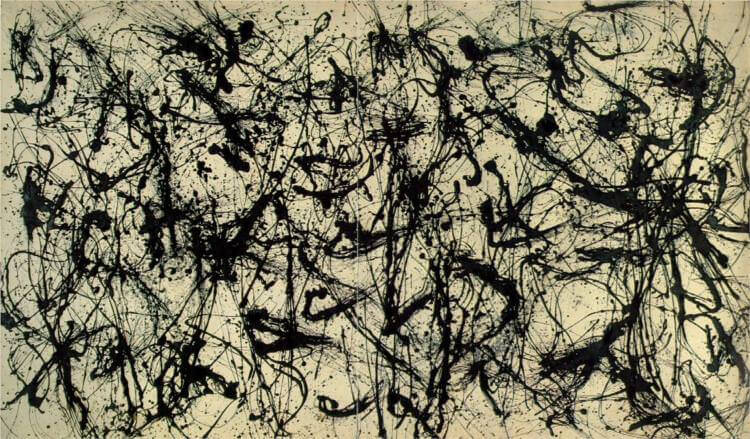
«رقم 32» - جاكسون بولوك

«رقم 32» - جاكسون بولوك


A Challenging Art Form

There’s a fine line between abstract art and mere decoration, and Jackson Pollock’s Number 32 (1950) skates that line. It’s neither meaningful nor meaningless, neither expressive nor expressionless. It says a great deal about western art to the person trained in art history. To the person who isn’t, it’s a banality that barely says anything at all.

The painting is a web of lines and patches of colour produced by freely pouring cheap household paint straight onto the canvas. The painting comprises only black paint against a raw, unadulterated canvas. It’s enormous — nine feet high and fifteen feet wide, and envelopes the viewer’s field of vision as they draw in close to view it.

Caption: Jackson Pollock, Number 32, 1950. (Fair use. Source: Wikiart)

Traditionally, even abstract paintings are composed of interrelated parts with varying emphases and depth conveyed through colour and shade. Number 32 has no parts, it’s all interrelation, all emphasis across the expanse of the rectangle of its surface.

This gives it a very shallow depth, perhaps no depth at all — just a skin of paint on a canvas. It’s a repudiation of form, and of colour. Even its name, simply a designated number – Number 32 – stubbornly resists any idea that it represents anything at all.

Other Pollock works hint at experience in their titles and the layered, symphonic use of colour and texture — “Autumn Rhythm”, “Lavender Mist”, “Blue Poles”, “Reflection of the Big Dipper”.

Not so with Number 32. It’s rawness and purity makes it less premeditated, the action of the artist is unmediated by choices about colour and layers. Pollock himself is more present here, in the stark traces of his motions.

For supporters of Pollocks work, this painting is a distillation of the artist’s aesthetic. To some, it’s vapid. Joseph Beuys, the post-war German sculptor, described American abstract art as “packaging” — all surface without content.

Some would agree that Number 32 exemplifies that emptiness of thought and feeling. The novelist and critic Robert Coates decided Pollock’s art was unorganized “explosions” of random energy. Sections of the public were scandalized, and still are. To them, Pollock’s art is perplexing and even an affront to taste or good sense. Pollock was branded “Jack the Dripper” among the sceptical media. “Anybody can do that!” is the common refrain, except that “anybody” didn’t do it. Pollock did.

But that’s part of the point of abstract art in the Western tradition, it’s a challenge. In so much that abstract art is challenging, Number 32 is its apotheosis.

The Story of Abstract Art

The story of abstraction’s path is well-worn into art historical scholarship, though the milestones have been subject to some surprising changes as art historians uncover new facts.

The basic story is as follows — artists from the nineteenth century onwards began to make use of the materiality of paint and the formal aspects of painting such as colour, tone and line.

This preoccupation with the non-representative aspects of art is known as “formalism” to art historians, because it is a preoccupation with the “form” through which content is mediated rather than the content itself.

To artists in the nineteenth century, it was labelled as “art for art’s sake” — it was the idea that the expressive conventions of art could be enjoyed without recourse to meaning or even representing anything at all.

James McNeill Whister’s Nocturne in Black and Gold — The Falling Rocket (1872) exemplifies this tendency that realised itself, many years later, in abstract art.

Whistler’s spatially ambiguous scene verges on the abstract as he attempts to convey the feeling or impression of a sight as opposed to faithfully reproducing it.

Caption: James Abbott McNeill Whistler, Nocturne in Black and Gold - The Falling Rocket, 1872-1877 (Public domain. Source: Wikipedia).
Caption: James Abbott McNeill Whistler, Nocturne in Black and Gold – The Falling Rocket, 1872-1877 (Public domain. Source: Wikipedia).

The leading British critic of the time, John Ruskin, accused Whistler of “flinging a pot of paint in the public’s face” in 1877. When Whistler sued Ruskin, his case wasn’t helped when officials mistakenly presented the painting to the court upside down. Whistler was bankrupted by the court case, but the march toward abstract art continued.

The first truly abstract artist is a matter of debate. Traditionally, Wassily Kandinsky — a Russian who made fully abstract paintings as early as 1911 is regarded as being the first abstract artist.

Caption: It is only in recent years that Hilma af Klint’s pioneering abstract work has received credit. This is a view of the popular exhibition at Guggenheim in 2018 (Ryan Dickey, CC BY 2.0)

Recently, however, thanks to a ground-breaking exhibition at the Los Angeles County Museum of Art in 1986 — The Spiritual in Art: Abstract Painting 1890–1985, Hilma af Klint has been credited as the first abstract painter. Klint began creating abstract paintings from 1906 in a theme of “primordial chaos”. The artist was secretive about her abstract works and had not shown any of them in any public exhibitions, remaining uncredited until recently.

The debate about who was first to abstraction will likely go on. The most important fact is that several prominent European artists had reached abstraction by the time of the First World War. Each had found their own particular way of deserting figurative art — there was no international “abstractionist” movement with a shared vision or manifesto.

In this light, the truly pressing question is why, for so many centuries, did western artists not embrace abstract art? Why was abstraction unnecessary, meaningless, inappropriate or even inconceivable through centuries of western art?

Many ideas have emerged to explain this. One of the more obvious theories is that the rise of photography as an art form, in correlation with the development of modern art, simply displaced figurative painting.

There are other, immaterial avenues to explore. Perhaps as artworks became increasingly fungible as commodities, paintings and sculptures could therefore more easily be untethered from the specific experiences of their creators. Perhaps spiritually bereft modernity in the West has emptied art of figurative content, so artists may as well forgo figurative representation.

Each of these answers is complicated and warrant a lot of explanation, and can only be speculative. There’s no one, clear answer.

It’s a question probably best put to anthropologists rather than art historians as to why abstract art became acceptable in the Western art canon at a certain point. What is clear is that abstract art has always existed in other parts of the world.

What made abstract art specifically modern in the Western world was the gallery system, which validated works of art as “Art”. Without the encumbrance of validation and the contrived spectacle of salon art in eastern and southern parts of the world, abstraction has thrived for millennia.

Virtual Realities and “Virtuality”

In Abstract Art: A Global History, art historian Pepe Karmel embraces the idea that abstract art has always legitimately existed when we consider it from a global perspective, while side-stepping the requirement to offer a theory for the rise of abstract art. For Karmel, abstract art is rooted in the real world, it’s never strictly “abstract”, and it’s a global, not a localized, tradition.

His survey of abstract art divides work into five broad real-world categories: bodies, landscapes, the cosmos, architectures, and signs and patterns. Examining abstract art in this way, Karmel is seeing subject matter in abstract paintings where more orthodox critics and historians saw formal constructions of colour and form.

It’s probably right to say that abstract art is better labelled as abstracted art — that the work of abstract artists are more often distilled expressions of experiences in form and colour than constructions of form and colour.

This is because of the intrinsic nature of painting and sculpture. They are media for expression, like a screen or stage for the artist’s imagination. As in a theatre or a cinema, the audience for a painting or sculpture suspend their disbelief in order to take in a scene.

It’s useful to think of a traditional figurative painting or a sculpture as a virtual reality. Artists for centuries used illusionistic tricks, such as linear perspective, foreshortening, and shading, to mimic the way we perceive things in real space. Scenes are constructed in a virtual space — be it the plinth or the canvas — for viewers to appreciate as an optical illusion.

Caption: Masolino da Panicale, St. Peter Healing a Cripple and the Raising of Tabitha (c. 1423). Western painting before the twentieth century relied on visual tricks to create a virtual reality. One such trick is linear perspective, and this painting the first extant example of the use of a consistent vanishing point.

The viewers of great works of art enjoy the meaning of what’s depicted and appreciate the way the illusion has been executed in pleasing combinations of colour and form.

Abstract art, to some degree, remains within this framework of aesthetic experience. The movements of modern art that led to abstraction — “isms” such as Impressionism, Fauvism, Cubism — sought to represent the world differently from all art before them.

They each claimed to come closer to a subjective truth by marginalizing all the traditional illusionistic tricks that attempted to faithfully reproduce reality as an objective truth.

Caption: Wassily Kandinsky’s Red-Yellow-Blue, 1925. (Public Domain. Source: Wikimedia Commons) Kandinsky was for a long time regarded as the father of western abstract painting.

For these movements, art became less of a virtual reality, but nevertheless retained a virtual-ness, becoming a virtuality. Abstraction takes that development — from virtual reality to virtuality — to its limit.

What does “virtuality” mean here? It means existing as essence and effect, but without recourse to reality. An abstract painting by Kandinsky, for example, is still an interrelationship of form and colour that depends upon painting as a schematic plane — a window into the singular “reality” that Kandinsky has envisioned.

Elements in Kandinsky paintings still have an interrelationship, as they would in the virtual reality space of a figurative painting. The essence of painting is intact — that virtual space is still there.

When abstract art is pure construction, doing away with the virtual space inherent to painting and sculpture, it becomes something distinct from painting and sculpture.

The minimalist Donald Judd described such artworks as “Specific Objects”. It’s a clumsy term, but appropriate enough to show that such artworks are neither painting nor sculpture, but another category altogether.

Judd used the term to describe his own works, but it could be applied as much to Kazimir Malevich’s and Frank Stella’s monochrome paintings, that wholly incorporate the canvas itself into the effect the work is hoping to achieve.

In such works, the surface of the canvass (or the plinth) are no longer a plane on which the forms and colours interact in virtual space. Instead, the forms and colours interact in real space, in our space.

Caption: Donald Judd saw his own works and many of his contemporaries as occupying a hybrid space that was neither painting nor sculpture. Donald Judd, Untitled, 1991. (Source: Wikimedia Commons. CC-4.0)

The parameters of success or failure for these works are different from the traditional disciplines of painting and sculpture. Judd saw the disciplines of painting and sculpture as getting in the way of what he wanted to achieve with colour and form. His “specific objects” had, in his view, a more intense effect.

Reality and New Forms of Perception

Painting itself has three general kinds of abstraction. Firstly, there is a lyrical style in which forms are painted in unconstrained movements; then there is geometric abstraction, where forms are structured; then there is colour field abstraction, where swathes of colour are rendered in a formless manner.

Each of these “styles” were not so much incidental or based on the taste and predilection of the painter as a means of some objective of artistic investigation.

A good example of this is the artist whose work is often seen as the epitome of geometric abstraction. Piet Mondrian’s grids of black lines and primary colour segments against a white ground are intended to evoke a “higher reality”.

For Mondrian, art in essence was opposed to reality, “because reality is opposed to the spiritual.” The aspects of painting that really mattered to Mondrian, no matter what painting you examined, were not the particular aspects of subject matter — who or what is depicted in the painting, for example — but the universally graspable aspects of form, line and colour. Mondrian’s paintings, like other artists, are an attempt to distil form and colour to come closer to that universal and spiritual essence of art.

Mondrian expressed the wish to reach the “foundation” of things through intuition. Many other abstract artists in the first half of the twentieth century expressed a desire to reach unseen but known or intuited forces around us.

Caption: Piet Mondrian, Composition II in Red, Blue and Yellow, 1930. (Public Domain. Source: Wikipedia).

In the latter part of the nineteenth century, unseen forces were better observed by scientists as new technologies proliferated, and it became more apparent that the world is more than what it appears to the eye. At the same time, alternative spiritual movements emerged that combined Platonist ideas with mysticism.

Klint and Mondrian were among the many artists who had dabbled in forms of spirituality outside the traditional realms of religion. Klint believed her paintings were commissioned from a spiritual realm, that her mission was to work “on the astral plane” to represent the spirit of man, rather than man’s mortal likeness.

By the 1920s, Freud’s formulation of the human unconscious had also permeated the art world. Surrealism, a tightly organised movement of artists that sought to mine the creative possibilities of the unconscious, was the prevalent cultural force in Europe between the world wars.

Surrealism wasn’t dogmatic about how the unconscious could be explored, and so a number of styles and methods emerged to attempt to bring the unconscious to the surface.

One of these methods was automatism, a process by which the artist gives up conscious control of the hand that is drawing or painting. In effect, artists like André Masson and Joan Miró embraced chance to construct their pictures by using free movements and even throwing paint at the canvas.

Arshile Gorky, an Armenian immigrant in the USA, developed a painting language that fused automatism with colour field abstraction. His paintings of the 1940s are monumental in size — owing to his earlier work as a state commissioned mural artist during the latter years of the Great Depression — yet expressive and lyrical in brushwork.

Gorky’s fusion of styles on a large scale inspired a generation of American artists in the postwar period to embrace abstraction working on a monumental scale. What we now call “Abstract Expressionism” was in fact a loose collection of artists working in all forms of abstraction.

What these artists perhaps had in common — at least in the early years — was the support of a new generation of critics led by Clement Greenberg, who believed that abstraction was the ultimate expression of western art.

Caption: Arshile Gorky, The Liver is the Cock’s Comb, 1944. (Public domain. Source: Wikimedia Commons).

Modernism and The Fate of Western Art

It was thought in some influential intellectual circles that art was progressing towards a goal. This is implicit in the label “avant-garde” given to artists seen to be breaking new aesthetic ground — the words come from the French designation of soldiers who advance into new territory.

For Greenberg, these artists were not expanding the frontiers of art’s possibilities, but rather advancing toward the true, singular purpose of each art form.

Greenberg is an important figure in the history of abstract art, both as a leading advocate for its pre-eminence over other kinds of painting and for the power he wielded. The critic sat on the state-funded American Committee for Cultural Freedom, a group set up to advance American art in the international scene.

Greenberg’s ideas became influential while the United States was part of the war on Fascism and Nazism, and during the subsequent Cold War against Soviet Communism.  The parameters for fascist and soviet art were clear — prescribed as they were by cultural authorities, what wasn’t clear was what “good” art looked and felt like in the democratic West.

Greenberg’s initial sympathies were Marxist, but his thinking was increasingly identified with American cultural hegemony. For Greenberg, abstraction like Pollock’s was exemplary art for a democratic society.

Modernism in art occurred, according to Greenberg, within the framework of the European Enlightenment — the flourishing of philosophical and scientific ideas that prioritized reason.

In his influential essay “Modernist Painting” (1961), the critic described Immanuel Kant, the German Enlightenment philosopher, as the “first real modernist.” Kant’s method of “critique” was to use reason to criticize reason with the purpose to clarify it and give it autonomy from other types of thinking.

Caption: Éduard Manet, Olympia, 1863. To Clement Greenberg, Manet was the first modernist. His scenes were painted in a deliberately flat style.

In the same way, modernist painters — from Éduard Manet in the nineteenth century to Morris Louis, a colour field painter working in the United States at the time Greenberg wrote the essay — were working to entrench the art of painting “more firmly in its area of competence.”

For Greenberg, the clarity of abstract art, which was true to its medium, was opposed to the “kitsch” of mass-produced folk culture. Removing the contamination of kitsch was a matter of clarification — each of the arts needed to become an expression of its intrinsic aesthetic possibilities.

Paintings are flat, and the illusion of depth that could be found in most Western art was an aberration from the essence of painting. The autonomy of an art form was in all the properties uncontaminated by other art forms. Form and colour were such properties in painting, and best expressed, according to Greenberg, as flatly as possible.

And so Greenberg hailed the “flatness” of the abstract painting of American artists like Jackson Pollock as the realization of this modernist clarity. These artists were grouped together as the next stage in modernism, their distinctly American vision had superseded European avant-garde art.

Just as American abstract art became dominant, Greenberg’s critical hegemony slipped. New forms of avant-garde art, inspired directly by mass culture, superseded Abstract Expressionism in the public imagination. “Pop” artists like Andy Warhol and Richard Hamilton embraced the kind of “kitsch” that Greenberg believed to be a contamination of true art.

Abstract painting lived on, but the boldest abstract painters jettisoned the rigid idea of “modernist critique” and medium-specific clarity for other forms of expression.

These “Postmodernists” looked to irony and the process of painting itself as ways of going beyond the perceived dead-end of modernism. The German Gerhard Richter embraced both approaches — some of his abstract works in the 1960s were made with squeegees rather than brushes, so that he could draw attention to the process of making the painting itself.

Other notable “abstract paintings” by Richter were actually carefully painted photo-realistic depictions of his other abstract paintings. The avant-garde of abstract painting became more conceptual, implicitly making the case that painting was less autonomous than Modernist critics had believed.

“Neo-Geo” artists like the painter Peter Halley and the sculptor Ashley Bickerton mimicked the visual language of geometric abstraction, but meshed it with the proliferating jungle of consumer goods in lurid, sometimes fluorescent, commercial colours.

Since that postmodern generation of painters and sculptors spanning the 1960s to the 1990s, abstraction has blossomed into a myriad of styles and approaches along with figurative art. Abstraction, freed of the burden of modernist expectations, is simply an approach to expression like any other.

Some abstract artists have even used the optical tricks of figurative art — such as perspective and shading —  in their paintings. Their aims are singular and usually unconcerned with theory.

Caption: “Postmodern” artists like Peter Halley copied the visual language of modernist abstract art (in this case geometric abstraction) to comment on the nature of art and meaning itself. These blocks of colour actually represent “cells” and “conduits”. Image: Installation view of Peter Halley’s exhibition “Prison” at Galleria Senda, Barcelona in 2012. (CC BY-SA 4.0 image by Abcd09)

This is liberating for the best among abstract painters who can commit a singular vision to the canvas. But the untethering of abstract art from a wider philosophical framework has also led to the murky proliferation of variously fungible abstract works that are “flipped” — quickly bought and sold at a profit — by speculative buyers.

This led the critic Jerry Saltz to write: “Zombies on the Walls: Why Does So Much New Abstraction Look the Same?” The pejorative “Zombie Formalism” was attached to a number of very high profile abstract painters who used a process aesthetic that has now become hackneyed.

Ironically these artists looked back to formalism of the kind of modernist art that Greenberg championed, but they of course worked in a historic vacuum, long after these ideas were in any way radical or even interesting.

The project of Modernism had not taken art to its terminus, but rather criticism. Criticism — the broad philosophical framework that validates and valorizes artworks for their cultural and historical significance — has lost direction and authority.

Western art’s course since the Enlightenment has been to oscillate between the poles of critical dogmatism and creativity. The problem is that in recent decades, in the absence of any coherent critical project, art has drifted towards pleasing an expanding diversity of niche interests.

Where there were once “movements” and “schools” of art — two words that suggest direction and discipline — there are now “scenes”.

This isn’t necessarily a bad thing. But in a world where “anything goes”, there’s no room for the kind of innovation and transgression that gave rise to abstract art in the West, and that made modern art so exciting.

It’s hard to grasp in this historical moment what made Pollock’s Number 32 so polarizing, so discomforting to norms, and so highly prized to people who believed that art has a place in society beyond pleasure.

الوسوم: artmana articles
ShareTweetSendShareSend
المقال السابق

الفنّ التجريدي: بين الماضي والحاضر

المقال التالي

الكهف: بين حوارات أفلاطون وسرديّة ساراماغو

أصدقاء القبور: قراءة أنثروبولوجية في تحولات الانتماء | محسن بن عبد الرحمن

أصدقاء القبور: قراءة أنثروبولوجية في تحولات الانتماء | محسن بن عبد الرحمن

11 نوفمبر، 2026

للوهلة الأولى، يبدو الجمع بين الصداقة والموت في عبارة "أصدقاء القبور" مفارقة لافتة؛ فالصداقة تنتمي إلى عالم الحياة والتواصل، بينما...

من نابولي إلى بطرسبرغ: المراقبة بين الفن وميكانيكا الكم | لين أسعد

من نابولي إلى بطرسبرغ: المراقبة بين الفن وميكانيكا الكم | لين أسعد

8 نوفمبر، 2026

نابولي، 1974 بين جمهور مارينا أبراموفيتش، نقف متفرجين، وتنتصب أمام أعيننا لافتة تقول: «أنا المسؤولة بالكامل». نرصد فساد البشر وشرورهم...

عقائد بدون جواز سفر | سعاد محبوبي

عقائد بدون جواز سفر | سعاد محبوبي

3 نوفمبر، 2026

قبل سنوات طويلة، قد تتجاوز قرنًا من الزمان، وحتى يومنا هذا، كانت الدول العظمى تفرض سيطرتها على دول العالم الثالث...
أجسادٌ مُستباحةٌ..عن الحبّ في الزّمن السَّائل | محمَّد حلمي عبد الوهَّاب

أجسادٌ مُستباحةٌ..عن الحبّ في الزّمن السَّائل | محمَّد حلمي عبد الوهَّاب

2 نوفمبر، 2026

في كتابه: الحبّ السَّائل: عن هشاشة الرَّوابط الإنسانية، يطبّق عالم الاجتماع البولنديّ زيجمونت باومان (19 نوفمبر 1925- 9 يناير 2019)...

عن منصة معنى

«معنى»، مؤسسة ثقافية تقدّمية ودار نشر تهتم بالفلسفة والمعرفة والفنون، عبر مجموعة متنوعة من المواد المقروءة والمسموعة والمرئية. انطلقت في 20 مارس 2019، بهدف إثراء المحتوى العربي، ورفع ذائقة ووعي المتلقّي المحلي والدولي، عبر الإنتاج الأصيل للمنصة والترجمة ونقل المعارف.

روابط سريعة

  • أرشيف معنى
  • مكتبة معنى
  • تطبيق معنى
  • الأفلام

التصنيفات

Articles & Essays MIT SMR SJPS أوراق ودراسات إعلانات معنى إيون الحياة الطيبة الفلسفة الآن الفيلسوف الجديد المتن الفلسفي المتن الفلسفي بودكاست ذا أتلانتيك سايكي سيكولوجي توداي غير مصنف مراجعات مقابلات وحوارات مقالات مقالات فرنسية مقالات من الصين نيويورك تايمز
  • الرئيسية
  • من نحن؟
  • الكتّاب
  • شروط النشر
  • نشرة معنى
  • السلة
  • الشروط والأحكام
  • سياسة الخصوصية
  • تواصل معنا
  • English
  • Chinese

© 2026 منصة معنى الثقافية

مرحبا بك!

قم بتسجيل الدخول إلى حسابك

هل نسيت كلمة المرور؟ تسجيل

قم بإنشاء حساب جديد!

املأ النموذج أدناه للتسجيل

جميع الحقول مطلوبة. تسجيل الدخول

طلب إعادة تعيين كلمة المرور

يرجى إدخال اسم المستخدم أو عنوان البريد الإلكتروني لإعادة تعيين كلمة المرور الخاصة بك.

تسجيل الدخول
تسجيل الدخول
استخدام عنوان البريد الإلكتروني
or
لست عضو الآن ؟ سجل الآن
استخدام Google
استخدام Apple
Or Use Social
إعادة تعيين كلمة المرور
استخدام عنوان البريد الإلكتروني
تسجيل
هل أنت مستخدم مسجل بالفعل؟ تسجيل الدخول الآن
No Result
عرض جميع النتائج
  • الرئيسية
  • مقابلات وحوارات
  • مقالات
  • مراجعات
  • أوراق ودراسات
  • المجلة السعودية
  • الفيلسوف الجديد
  • دخول / تسجيل

© 2026 منصة معنى الثقافية

polestoto

lahirtoto

warung403

warung403 login

situs warung403

lahirtoto

LAHIRTOTO

LAHIRTOTO LOGIN

lahirtoto

imgstock

Hosting Gambar

WhatsApp Kembangkan Fitur Privasi untuk Melindungi Percakapan Pengguna

Teknologi Kamera AI Membawa Perubahan pada Fotografi Smartphone

Serangan Malware Android Menjadi Ancaman bagi Keamanan Data Pengguna

Microsoft Perluas Penggunaan AI untuk Mendukung Produktivitas Windows

Teknologi Layar OLED Terbaru Menawarkan Tampilan Lebih Hemat Energi

Penipuan QR Code Menjadi Ancaman Baru dalam Transaksi Digital

Google Maps Terus Berkembang dengan Fitur Navigasi yang Lebih Cerdas

Penyimpanan Cloud Semakin Populer, Keamanan File Jadi Perhatian

Teknologi Chip Generasi Baru Mendorong Performa Laptop Lebih Efisien

Aplikasi Palsu di Internet Mengancam Privasi dan Keamanan Smartphone

Kasino Online dan Risiko Pencurian Identitas Melalui Halaman Verifikasi Palsu

Ketika Teknologi AI Digunakan untuk Membuat Ulasan Kasino Digital yang Menyesatkan

Memahami Peran WebSocket dalam Komunikasi Real Time pada Kasino Online

Kasino Digital dan Tantangan Melindungi Informasi Pengguna dari Serangan Siber

Di Balik Tampilan Kasino Online, Ada Proses Pemrosesan Data yang Tidak Terlihat

Kasino Online dalam Sorotan Fenomena Penipuan Menggunakan Identitas Platform Terkenal

Ketika Kasino Digital Menghadapi Risiko Penyalahgunaan Akses oleh Pihak Tidak Berwenang

Memahami Hubungan antara Kasino Online dan Perkembangan Sistem Autentikasi Modern

Kasino Digital dan Fenomena Manipulasi Testimoni dalam Ekosistem Internet

Menelusuri Peran Firewall dalam Menjaga Infrastruktur Layanan Kasino Online

Kasino Online dan Tantangan Menghadapi Ancaman Malware pada Perangkat Pengguna

Ketika Sistem Kasino Digital Mengalami Keterlambatan Pemrosesan Transaksi

Kasino Digital dalam Pembahasan tentang Risiko Penyalahgunaan Informasi Pembayaran

Memahami Mengapa Keamanan API Menjadi Penting bagi Platform Kasino Online

Kasino Online dan Fenomena Rekayasa Sosial yang Menargetkan Pengguna Internet

Di Balik Aktivitas Kasino Digital, Ada Sistem Pencatatan yang Mendukung Keamanan

Kasino Online dan Tantangan Menghadapi Penyebaran Tautan Berbahaya di Media Sosial

Ketika Teknologi Biometrik Menjadi Bagian dari Sistem Verifikasi Kasino Digital

Kasino Digital dan Pentingnya Memahami Risiko Penyimpanan Informasi di Cloud

Menelusuri Hubungan antara Kasino Online dan Perkembangan Teknologi Keamanan Jaringan

Ketika AI Membuat Rekaman Scatter Hitam Mahjong Ways 2 Terlihat Nyata, Mengenal Tantangan Verifikasi Video Digital

Mengapa Grafik Hasil Gates of Olympus Bisa Terlihat Membentuk Siklus, Memahami Ilusi Pola dalam Data Acak

Shio Kuda Api dan Percakapan Komunitas Starlight Princess pada 2026, Mengenal Pengaruh Tradisi terhadap Persepsi

Fenomena Konten RTP Live Pragmatic Play yang Dibagikan Ulang, Mengapa Informasi Lama Bisa Dianggap Terbaru

Mengenal Pengaruh Mode Gelap Smartphone terhadap Keterbacaan Simbol Mahjong Wins 3

Ketika Shio Naga Dikaitkan dengan Angka Keberuntungan Fortune Dragon, Memahami Batas Simbol Budaya dan Statistik

Mengapa Cuplikan Video Pola Mahjong Ways Lebih Mudah Viral daripada Penjelasan Statistik yang Lengkap

Risiko Situs Tiruan yang Mengatasnamakan PG Soft, Mengenal Cara Memeriksa Keaslian Halaman Digital

Mengenal Pengaruh Efek Getaran pada Gates of Olympus terhadap Respons dan Perhatian Pengguna

Ketika AI Menyusun Ringkasan Pola Starlight Princess dari Forum, Mengapa Banyaknya Komentar Bukan Bukti Akurat

Ketika Video Scatter Hitam Mahjong Ways 2 Beredar Tanpa Sumber, Mengenal Pentingnya Verifikasi Konten Digital

Mengenal Data Drift dalam Analisis Mahjong Ways, Mengapa Perubahan Grafik Tidak Selalu Menandakan Sistem Baru

Shio Kuda Api dan Perbincangan Keberuntungan Menjelang Akhir 2026, Memahami Pengaruh Tradisi pada Konten Digital

Ketika Chatbot AI Memberikan Jawaban tentang RTP Gates of Olympus, Mengapa Sumber Informasi Perlu Diperiksa

Mengapa Animasi Scatter pada Starlight Princess Dapat Membentuk Ekspektasi Berbeda bagi Setiap Pengguna

Fenomena Pola Berulang dalam Mahjong Wins 3, Mengenal Perbedaan Korelasi dan Hubungan Sebab Akibat

Shio Naga dan Filosofi Kekuatan dalam Fortune Dragon, Memahami Peran Simbol Budaya pada Ilustrasi Modern

Ketika Konten Pragmatic Play Dibagikan Melalui Grup Pesan, Mengenal Risiko Tautan dan File yang Tidak Terverifikasi

Mengenal Pengaruh Frame Rate terhadap Animasi Mahjong Ways 2 pada Smartphone dengan Spesifikasi Berbeda

Mengapa Klaim Prediksi Pola Gates of Olympus dari AI Tidak Bisa Diterima Tanpa Pengujian

Fenomena Poster Scatter Hitam yang Dibuat dengan AI, Memahami Mengapa Detail Visual Bisa Menyesatkan

Shio Ular dan Makna Kebijaksanaan dalam Tradisi Tiongkok, Mengenal Pengaruhnya pada Diskusi Mahjong Ways

Ketika Riwayat Gates of Olympus Diubah Menjadi Infografik, Mengapa Pemilihan Skala Dapat Mengubah Persepsi

Mengenal Risiko Aplikasi Modifikasi Mahjong Ways yang Menjanjikan Fitur Tambahan Tidak Resmi

Mengapa Komentar tentang Jam Keberuntungan Starlight Princess Mudah Dipercaya dalam Komunitas Online

Simbol Kelinci dalam Fortune Rabbit dan Tradisi Tiongkok, Memahami Peran Warna Emas dalam Desain Digital

Ketika AI Merangkum Diskusi Pola Pragmatic Play, Mengenal Risiko Informasi Keliru yang Terlihat Konsisten

Perbedaan Cache Browser dan Data Permainan Mahjong Wins 3, Memahami Mengapa Tampilan Bisa Berubah Setelah Pembaruan

Shio Kerbau dan Simbol Ketekunan dalam Konten Gates of Olympus, Memisahkan Nilai Budaya dari Peluang Permainan

Mengenal Survivorship Bias dalam Unggahan Hasil Mahjong Ways, Mengapa Cerita Populer Tidak Mewakili Semua Pengalaman

Ketika Deepfake Digunakan untuk Menampilkan Klaim Pola Mahjong Ways 2, Mengenal Risiko Manipulasi Identitas

Mengenal Perbedaan Latensi Jaringan dan Respons Server saat Mengakses Gates of Olympus

Shio Monyet dan Simbol Kecerdikan dalam Budaya Tiongkok, Mengapa Tafsirnya Tidak Menjadi Bukti Pola Starlight Princess

Ketika Data Mahjong Wins 3 Dibaca Menggunakan Grafik Heatmap, Memahami Risiko Melihat Pola yang Sebenarnya Acak

Fenomena Akun Palsu yang Membagikan Informasi RTP Pragmatic Play, Mengenal Tanda Penipuan Digital

Mengenal Pengaruh Kecerahan Adaptif terhadap Detail Simbol Fortune Dragon pada Layar Smartphone

Shio Ayam dan Simbol Ketelitian dalam Diskusi Gates of Olympus, Memahami Perbedaan Karakter Budaya dan Analisis Data

Ketika Video Starlight Princess Diputar Ulang dalam Gerakan Lambat, Mengapa Detail Animasi Bisa Ditafsirkan Berbeda

Mengenal Risiko QR Code Tidak Dikenal dalam Komunitas Mahjong Ways, Dari Pengalihan Situs hingga Pencurian Data

Mengapa Pembahasan Algoritma Rahasia PG Soft Sering Muncul Kembali, Mengenal Pengaruh Memori dan Bias Pengulangan

Kasino Online dan Fenomena Dark Pattern dalam Desain Layanan Digital

Ketika Kasino Digital Menghadapi Ancaman Serangan DDoS pada Infrastruktur Server

Memahami Peran DNS dalam Menghubungkan Pengguna dengan Layanan Kasino Online

Kasino Digital dan Tantangan Menjaga Keamanan Sesi Login Pengguna

Di Balik Kecepatan Akses Kasino Online, Ada Teknologi CDN yang Mendukung Distribusi Konten

Kasino Online dalam Pembahasan tentang Risiko Aplikasi dari Sumber Tidak Resmi

Ketika Sistem Kasino Digital Menggunakan CAPTCHA untuk Membatasi Aktivitas Bot

Kasino Digital dan Fenomena Informasi yang Terpotong dalam Konten Video Pendek

Memahami Peran Pembaruan Browser dalam Menjaga Keamanan Akses Kasino Online

Kasino Online dan Pentingnya Mengenali Risiko Penggunaan Perangkat Bersama

Kasino Online dan Fenomena Deepfake yang Mengaburkan Keaslian Konten Promosi

Memahami Peran Cache Browser dalam Menampilkan Informasi Kasino Digital

Ketika Kasino Online Menghadapi Risiko Kebocoran Data dari Pihak Ketiga

Kasino Digital dan Tantangan Mengenali Manipulasi Visual dalam Konten Internet

Di Balik Penggunaan QR Code pada Kasino Online, Ada Risiko Keamanan yang Perlu Dikenali

Kasino Online dalam Sorotan Perkembangan Teknologi Identifikasi Perangkat

Mengenali Pengaruh Social Proof dalam Membentuk Kepercayaan terhadap Kasino Digital

Kasino Digital dan Pentingnya Memahami Risiko Penggunaan Kata Sandi Berulang

Ketika Konten Kasino Online Menyebar Melalui Algoritma Rekomendasi Media Sosial

Kasino Online dan Tantangan Menjaga Privasi dalam Ekosistem Periklanan Digital

Baidu Perkenalkan ERNIE 5.5 Flash, Model AI Baru Mulai Tersedia di OpenRouter

OpenAI Hadirkan Alat Keamanan AI untuk Membantu Perusahaan Menghadapi Serangan Siber

Telkom Perkenalkan Ekosistem Sovereign AI untuk Mendukung Inovasi Digital Indonesia

MIT Susun Panduan Baru untuk Mengurangi Risiko Penggunaan AI di Perusahaan

Insight Luncurkan Agent Store untuk Mempermudah Penerapan AI di Dunia Kerja

Komdigi Siapkan Pengawasan Teknologi Digital Berdasarkan Tingkat Risiko

Orca Security dan Flashpoint Jadi Sorotan dalam Perkembangan Keamanan Siber

Indonesia dan Estonia Perkuat Kerja Sama Keamanan Data dan Identitas Digital

Visure X Hadir dengan Teknologi AI untuk Membantu Pengelolaan Kebutuhan Perangkat Lunak

Nvidia dan AMD Bergabung dalam Konsorsium SGLang untuk Pengembangan AI

Fenomena Deepfake dalam Konten Mahjong Ways 2, Mengenal Cara Video Buatan AI Memengaruhi Kepercayaan Penonton

Ketika Data Gates of Olympus Dianalisis Menggunakan AI, Mengapa Hasil Simulasi Tidak Sama dengan Prediksi Nyata

Shio Kuda Api dan Tradisi Keberuntungan Tahun 2026, Memahami Pengaruh Simbol Budaya pada Komunitas Starlight Princess

Mengenal Fenomena FOMO dalam Komunitas Mahjong Wins 3, Ketika Konten Viral Memengaruhi Keputusan Pengguna

Perbedaan RTP Teoretis dan Statistik Sesi Pendek pada PG Soft, Mengapa Angka yang Terlihat Bisa Berbeda Jauh

Ketika Shio Ayam Dikaitkan dengan Ketelitian Membaca Pola Mahjong Ways, Memahami Batas Tafsir Simbolis

Pengaruh Algoritma Rekomendasi TikTok terhadap Penyebaran Video Scatter Hitam Mahjong Ways 2

Mengenal Risiko Ekstensi Browser Tidak Resmi yang Mengklaim Bisa Membaca Pola Gates of Olympus

Simbol Keberuntungan Fortune Rabbit dalam Desain Mobile, Memahami Hubungan Warna dan Persepsi Pengguna

Mengapa Hasil Mahjong Ways yang Dibagikan Komunitas Tidak Selalu Mewakili Peluang Sebenarnya

Kasino Online dan Peran Teknologi Browser dalam Menjaga Kelancaran Akses Digital

Di Balik Sistem Kasino Digital, Ada Proses Sinkronisasi Data yang Jarang Dibahas

Ketika Kasino Online Menghadapi Tantangan Keamanan pada Perangkat Seluler

Memahami Pengaruh Latensi Jaringan terhadap Respons Layanan Kasino Digital

Kasino Digital dan Fenomena Penggunaan Informasi Pribadi dalam Ekosistem Internet

Menelusuri Cara Sistem Kasino Online Menangani Gangguan Koneksi Mendadak

Kasino Online dan Pentingnya Mengenali Risiko Ekstensi Browser yang Tidak Terpercaya

Ketika Pembaruan Sistem Mengubah Tampilan dan Navigasi Kasino Digital

Kasino Digital dalam Pembahasan tentang Keamanan Penyimpanan Data Pengguna

Memahami Hubungan antara Kasino Online dan Perkembangan Teknologi Deteksi Aktivitas Tidak Wajar

Microsoft 365 Alami Gangguan Global, Outlook dan Teams Ikut Terdampak

Google Perkenalkan Gemini 4 Hydrogen dengan Kemampuan AI yang Lebih Cepat

Samsung Galaxy Z Fold8 Raih Penghargaan Gadget Terbaik Tahun 2026

Vivo V80 Series Hadir dengan Kamera ZEISS dan Dukungan Fitur AI

Huawei Watch D3 Hadirkan Pemantauan Tekanan Darah Lewat Smartwatch

Cisco Gandeng Anthropic untuk Menguji Keamanan Teknologi Agen AI

Ancaman Krisis RAM Membayangi Industri Smartphone Menjelang 2027

Apple Dikabarkan Tingkatkan Produksi MacBook Neo Generasi Terbaru

Modus Foto KTP Deepfake Ditemukan dalam Registrasi Kartu SIM

Registrasi SIM Berbasis Biometrik Mulai Mengubah Kebiasaan Pengguna Seluler

Serangan Phishing Jadi Perhatian Setelah Gangguan Microsoft 365

Google Find Hub Membantu Pengguna Melacak Smartphone Android yang Hilang

Akamai Perkenalkan Teknologi Isolasi untuk Melindungi Data dari Agen AI

Samsung Galaxy S27 Ultra Mulai Jadi Sorotan Lewat Bocoran Spesifikasi

Teknologi Pendinginan Pusat Data Semakin Penting di Tengah Pertumbuhan AI

Nokia Perluas Bisnis Jaringan AI dan Perkuat Kerja Sama dengan Indosat

Penipuan Menggunakan Suara AI Meningkatkan Risiko Keamanan Identitas Digital

Serangan Siber Berbasis AI Agent Mendorong Penguatan Keamanan Jaringan

Microsoft Ungkap Dugaan Penyebab Gangguan Outlook dan Teams

Pertumbuhan Layanan AI Mendorong Kebutuhan Memori Komputer Semakin Besar

Fenomena Video Scatter Hitam Mahjong Ways 2 yang Diedit AI, Memahami Mengapa Tampilan Realistis Belum Tentu Asli

Ketika Pola Gates of Olympus Dibahas oleh Komunitas Digital, Mengenal Pengaruh Pengulangan Informasi terhadap Kepercayaan

Shio Kuda Api dalam Kalender Tiongkok, Memahami Mengapa Ramalan Keberuntungan Sering Dikaitkan dengan Mahjong Ways

Peran Machine Learning dalam Membaca Data Starlight Princess, Mengapa Model AI Tidak Selalu Mampu Mengenali Pola Nyata

Mengenal Efek Ilusi Kontrol dalam Permainan Mahjong Wins 3, Ketika Pilihan Pengguna Terasa Memengaruhi Hasil Acak

Simbol Shio Naga dan Ular dalam Konten Fortune Dragon, Memahami Perbedaan Makna Tradisional dan Interpretasi Digital

Fenomena RTP Live pada Permainan Pragmatic Play, Mengenal Perbedaan Informasi Resmi dan Angka yang Beredar di Internet

Ketika Screenshot Mahjong Ways Dibagikan Tanpa Konteks, Memahami Risiko Kesimpulan dari Satu Hasil Permainan

Pengaruh Latensi Internet terhadap Animasi Gates of Olympus, Mengenal Perbedaan Gangguan Tampilan dan Hasil Permainan

Shio Monyet dan Anggapan Kemampuan Membaca Pola, Memahami Hubungan Simbol Kecerdikan dengan Persepsi Pemain

Fenomena Scatter Hitam Mahjong Ways 2 dalam Konten AI, Mengenal Risiko Gambar Buatan yang Dianggap Sebagai Fitur Asli

Ketika Pola Mahjong Ways Dibahas Melalui Live Streaming, Memahami Pengaruh Komentar Penonton terhadap Persepsi Hasil

Shio Anjing dan Makna Kesetiaan dalam Tradisi Tiongkok, Mengenal Hubungannya dengan Komunitas Gates of Olympus

Penggunaan AI untuk Membandingkan RTP Permainan Digital, Mengapa Data dari Sumber Berbeda Tidak Selalu Setara

Mengapa Simbol yang Hampir Sama pada Starlight Princess Bisa Memicu Anggapan tentang Pola Tersembunyi

Shio Ular Kayu dan Filosofi Perubahan, Memahami Perbedaan Tafsir Budaya dengan Mekanisme Fortune Dragon

Riwayat Putaran Mahjong Wins 3 dalam Bentuk Grafik, Mengapa Visualisasi Data Bisa Menimbulkan Tafsir Berbeda

Fenomena Klaim Pola Terbaru Gates of Olympus di Media Sosial, Mengenal Pentingnya Bukti dan Konteks Informasi

Pengaruh Animasi Berkecepatan Tinggi pada Mahjong Ways 2, Memahami Hubungan Gerakan Visual dengan Perhatian Pengguna

Ketika Chatbot AI Menafsirkan Angka Keberuntungan Shio, Mengenal Batas Penjelasan Budaya dan Prediksi Statistik

Istilah Pola Tangga pada Mahjong Ways, Mengapa Susunan Hasil Acak Bisa Terlihat Memiliki Arah Tertentu

Efek Suara Gates of Olympus dan Persepsi Keberhasilan, Mengenal Cara Audio Memengaruhi Pengalaman Digital

Ketika Ramalan Shio Dibagikan Bersama Konten Starlight Princess, Memahami Peran Algoritma Media Sosial

Mengenal Gambler's Fallacy dalam Diskusi Mahjong Wins 3, Mengapa Hasil Sebelumnya Tidak Menjamin Hasil Berikutnya

Poster Scatter Emas dan Scatter Hitam di Internet, Mengenal Tanda Ilustrasi yang Tidak Mewakili Fitur Resmi

PG Soft dan Desain Antarmuka Mobile, Memahami Pengaruh Ukuran Layar terhadap Pengalaman Mahjong Ways

Shio Kerbau dan Filosofi Ketekunan, Mengapa Makna Tradisional Tidak Dapat Menentukan Hasil Gates of Olympus

Membaca Grafik Riwayat Starlight Princess, Mengenal Perbedaan Tren Visual dan Bukti Perubahan Sistem

Mengapa Video Pola Mahjong Ways Sering Terlihat Meyakinkan, Mengenal Pengaruh Penyuntingan dan Pemilihan Adegan

Fortune Dragon dan Ornamen Naga Asia, Mengenal Cara Desain Modern Mengadaptasi Warisan Visual Tradisional

Mengenal Confirmation Bias dalam Komunitas Pragmatic Play, Ketika Pengalaman Pribadi Dianggap Sebagai Bukti Pola

Mode Hemat Baterai saat Membuka Mahjong Wins 3, Memahami Pengaruhnya terhadap Animasi dan Respons Layar

Shio Kambing dan Simbol Harmoni dalam Budaya Tiongkok, Memahami Penggunaannya pada Konten Permainan Digital

Perbedaan Simulasi AI dan Prediksi Hasil Mahjong Ways, Mengapa Model Statistik Memiliki Batas Kemampuan

Fenomena Near Miss pada Gates of Olympus, Mengenal Mengapa Hasil yang Hampir Sesuai Terasa Begitu Berarti

Mengenal Pengaruh Refresh Rate Smartphone terhadap Tampilan Animasi Starlight Princess

Shio Babi dan Anggapan Kemakmuran dalam Konten Mahjong Ways, Memahami Batas antara Tradisi dan Statistik

Ketika Angka RTP Dibagikan Tanpa Sumber, Mengenal Cara Memeriksa Informasi Permainan PG Soft

Wild Bounty Showdown dan Desain Simbol Bergaya Barat, Mengenal Pengaruh Tema Visual terhadap Pengalaman Pengguna

Mengapa Klaim Algoritma Rahasia Mahjong Ways Mudah Menyebar, Memahami Peran Rasa Penasaran dan Literasi Digital